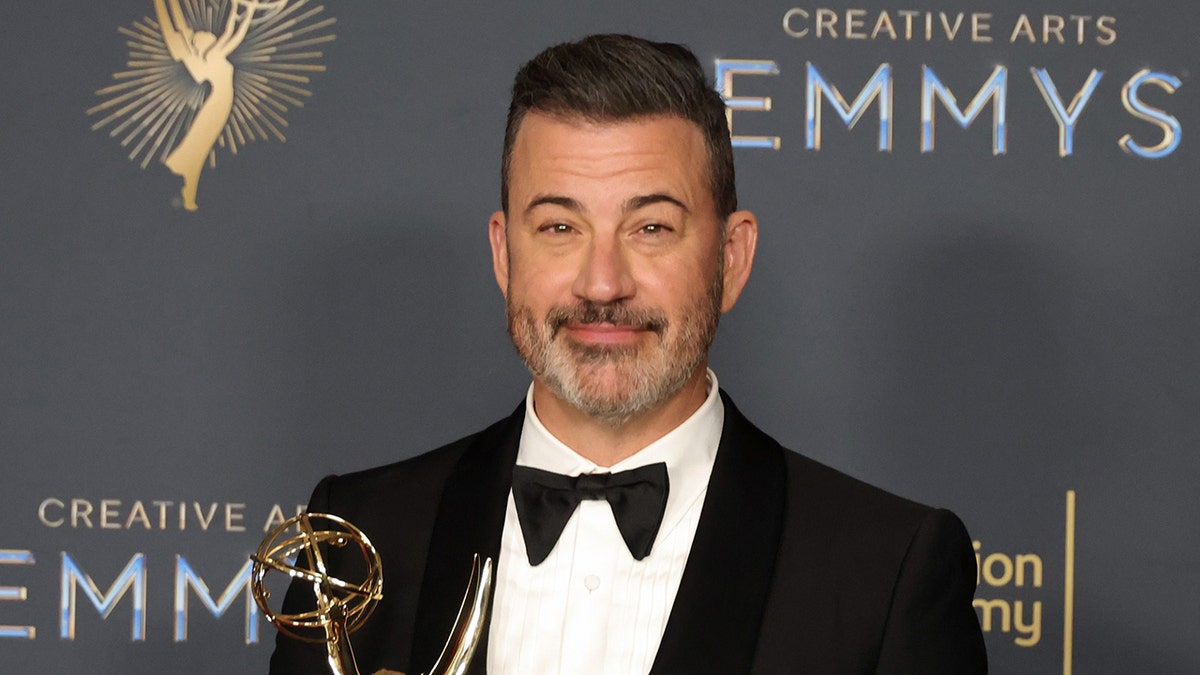
Donald Trump joked about being shot. Jimmy Kimmel didn’t laugh.
Instead, he responded with one of the most direct, unflinching rebukes of a sitting political figure in recent late-night television history. When Trump, during a rally, quipped, “I could stand in the middle of Fifth Avenue and shoot somebody and I wouldn’t lose voters,” he was widely interpreted as boasting about unwavering support. But at a later event, he took it further—suggesting, in jest, that if he were assassinated, his supporters would finally unite. That’s where Jimmy Kimmel drew the line.
In a now-viral monologue, Kimmel didn’t mock. He didn’t exaggerate. He laid out the facts, condemned the rhetoric, and questioned the normalization of violence—even in jest.
This wasn’t just comedy. It was a public intervention.
The Joke That Crossed a Line
Trump’s comment wasn’t delivered in a scripted format. It emerged during an off-the-cuff exchange, framed as dark humor about his political invincibility. “They’ll finally come together if I get shot,” he said, smirking. The crowd chuckled. Some cheered.
But the moment reverberated far beyond the rally floor.
Kimmel addressed it head-on in a Jimmy Kimmel Live! monologue that abandoned punchlines for precision. “You don’t joke about being assassinated,” he said. “Not when your opponents are routinely called ‘enemies of the people.’ Not when your rallies feature signs that say ‘traitors will be hung.’ Not when armed protests have become commonplace.”
He wasn’t alone in his concern. Security analysts, political commentators, and mental health professionals have long warned that repeated joking about political violence desensitizes the public—and may embolden unstable individuals.
Kimmel’s critique wasn’t just about taste. It was about consequence.
Why Late-Night Hosts Matter in Political Discourse
Late-night comedy has long been more than entertainment. From Johnny Carson to Jon Stewart, comedians have served as cultural commentators, holding power to account through satire and timing.
But Kimmel’s response stands out because it rejected comedy. He didn’t turn Trump’s words into a parody sketch or a recurring gag. Instead, he treated the statement as a serious breach of rhetorical norms.
This shift reflects a broader change in media. In an era where political leaders use humor as a shield—deflecting criticism by claiming “it was just a joke”—comedians are being forced to recalibrate.
Kimmel’s monologue underscored a key tension: When does satire become complicity? And when does joking about violence stop being protected speech and start becoming incitement by implication?
By refusing to laugh, Kimmel positioned himself not as an entertainer, but as an editor of the national conversation.
The History of Dangerous Political Humor
Trump isn’t the first politician to flirt with violent imagery.
In 2001, Sarah Palin famously listed political targets on a map using crosshairs. Gabrielle Giffords, later shot in a mass shooting, was one of them. Palin denied responsibility, calling it “political rhetoric,” but the optics were damning.
Similarly, in 2017, Trump joked about locking up his rival, Hillary Clinton. At a rally, he told the crowd, “If I win, I am going to instruct my attorney general to get a special prosecutor to look into your situation.” The audience roared. Critics called it authoritarian.
What sets Trump’s assassination joke apart is its self-referential nature. It’s not just threatening others—it’s normalizing the idea of his own violent death as political theater.

Kimmel challenged this directly: “You say it’s a joke. But what does it tell your supporters? That your death would be worth it if it rallied the base? That violence is the only thing that could unify your movement?”
It’s a disturbing narrative—one that makes martyrdom a political strategy.
How Comedians Navigate the Edge
Satire walks a tightrope. Push too hard, and you alienate. Pull back, and you enable.
Kimmel has long balanced this. His show regularly mocks Trump, but with a mix of mockery and mockery of the system that allows him to thrive.
But this time, the balance tipped.
He didn’t make a Top 10 list. He didn’t air rally clips with a laugh track. He looked into the camera and said, “This isn’t funny. And it isn’t smart. It’s dangerous.”
That’s rare.
Most late-night hosts rely on irony. Kimmel chose clarity.
And in doing so, he highlighted a growing dilemma for comedians: When the world stops distinguishing between satire and reality, should comedy continue as usual?
The answer, for Kimmel, was no.
The Public Reaction: Divided and Intense
As with most things involving Trump, the response split sharply along political lines.
Supporters dismissed Kimmel’s remarks as overblown. “He can’t take a joke,” one commentator said. “Trump was being ironic. Kimmel’s just mad he’s not relevant.”
But others praised the monologue as courageous.
CNN’s Brian Stelter called it “one of the most important things said on TV this year.” Mental health advocates noted that joking about assassination—even one’s own—can trigger vulnerable individuals. And law enforcement officials have quietly expressed concern about rising threats against public figures.
What made Kimmel’s critique resonate was its restraint. He didn’t call Trump names. He didn’t speculate about motives. He simply laid out the facts and asked the audience to consider the implications.
That approach cut through the noise.
The Role of Media in Normalizing Extremes
Kimmel’s segment wasn’t just about Trump. It was about the ecosystem that allows such rhetoric to flourish.
He pointed out how repeated exposure to extreme statements makes them seem ordinary. “At first, we were shocked when he talked about building a wall. Then we debated the funding. Now, we’re debating whether joking about being shot is acceptable.”
It’s a form of gradual normalization—what psychologists call “creeping normality.”
When outrageous statements are treated as routine, they stop being checked. The media covers them as news, late-night mocks them as comedy, and voters absorb them as policy.
Kimmel challenged that cycle: “We can’t keep pretending this is just part of the show. Because real people watch this. And some of them take it seriously.”
He cited the January 6 Capitol riot as a case in point—where rhetoric, memes, and jokes converged into violent action.
“If we laugh at everything,” he asked, “what do we do when it stops being funny?”
Comparing Reactions: Other Hosts Stay Silent or Pivot to Comedy
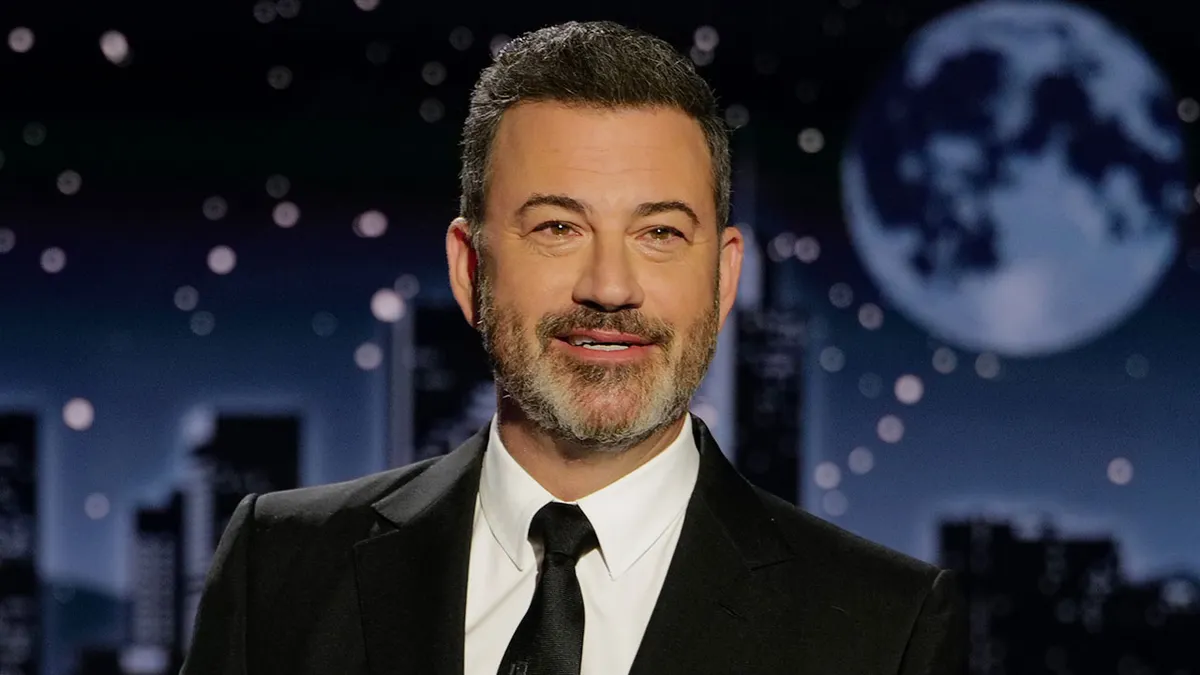
While Kimmel issued a direct rebuke, other late-night hosts responded differently.
Stephen Colbert turned the moment into a satirical sketch, imagining Trump’s “perfect martyrdom.” Seth Meyers mocked the logic but didn’t question the ethics. John Oliver, absent at the time, later called the joke “disgusting” but didn’t dedicate airtime to it.
Only Desus & Mero matched Kimmel’s tone, calling Trump’s comment “reckless” and “a signal to extremists.”
This divergence reveals a split in late-night strategy:
- Satire-first: Use jokes to process the absurdity (Colbert, Meyers)
- Ethics-first: Treat dangerous rhetoric as a public issue (Kimmel, Desus & Mero)
Kimmel’s choice to break format suggests a belief that some moments demand more than comedy.
And in doing so, he’s redefining what late-night can be—not just entertainment, but moral commentary.
The Broader Implications for Free Speech and Responsibility
Free speech protects offensive ideas. But it doesn’t require us to treat them as harmless.
Kimmel didn’t advocate censorship. He didn’t call for bans or investigations. He simply asked for accountability.
“We have free speech in this country,” he said. “But with that comes responsibility. You can say anything. But you can’t pretend there are no consequences.”
That includes social consequences. Public figures shape culture. When a former president jokes about his own assassination, it doesn’t exist in a vacuum.
It’s repeated in echo chambers. It’s shared without context. It’s absorbed by people who don’t understand irony.
Kimmel’s message was clear: Humor has limits. Especially when lives are at stake.
What This Means for Political Discourse Going Forward Kimmel’s rebuke marks a turning point.
It’s not just about one joke. It’s about a pattern of rhetoric that blurs the line between performance and provocation.
As political divisions deepen, the role of media—entertainment and news alike—becomes more critical.
Do we normalize extreme statements in the name of free expression? Or do we challenge them, even when they come wrapped in humor?
Kimmel chose the latter. And in doing so, he set a precedent.
Other hosts, journalists, and public figures now face the same choice: Will they laugh—or will they speak up?
The answer will shape the tone of American discourse for years to come.
Final Thoughts
Jimmy Kimmel didn’t just call out a joke. He called out a culture—one that excuses dangerous rhetoric in the name of entertainment, populism, or free speech.
His response was measured, direct, and devoid of punchlines. And that’s what made it powerful.
In a media landscape built on clicks and comedy, sometimes the most radical act is to say: This isn’t funny.
For public figures, journalists, and audiences alike, the takeaway is urgent: Words have weight. Even when delivered with a smile.
If you’re creating content, hosting a show, or shaping public opinion—ask yourself: Are you amplifying the joke, or challenging its cost?
Because not all humor is harmless. And not all silence is neutral.
FAQ
Why did Jimmy Kimmel react so strongly to Trump’s joke? Kimmel viewed the joke as dangerous rhetoric that normalizes political violence, especially when directed at a figure with a polarized base.
Did Trump actually joke about being assassinated? Yes—during a rally, Trump said his supporters would “finally come together” if he were shot, framing it as dark humor about political unity.
Has Trump made similar jokes before? Yes. Trump has a history of using violent imagery, including suggesting he’d “shoot somebody” on Fifth Avenue and calling for opponents to be jailed.
How did audiences respond to Kimmel’s monologue? Reactions were polarized. Many praised Kimmel for taking a moral stand, while Trump supporters accused him of overreacting.
Is joking about assassination protected free speech? Legally, yes—under the First Amendment. But ethical debates persist about the social impact of such statements.
Did other comedians respond like Kimmel? Most opted for satire rather than direct criticism. Kimmel’s uncharacteristic seriousness made his response stand out.
What precedent does this set for late-night TV? It signals a shift where comedians may increasingly prioritize ethical responsibility over entertainment when confronting dangerous rhetoric.
FAQ
What should you look for in Kimmel Calls Out Trump's Joke About His Own Death? Focus on relevance, practical value, and how well the solution matches real user intent.
Is Kimmel Calls Out Trump's Joke About His Own Death suitable for beginners? That depends on the workflow, but a clear step-by-step approach usually makes it easier to start.
How do you compare options around Kimmel Calls Out Trump's Joke About His Own Death? Compare features, trust signals, limitations, pricing, and ease of implementation.
What mistakes should you avoid? Avoid generic choices, weak validation, and decisions based only on marketing claims.
What is the next best step? Shortlist the most relevant options, validate them quickly, and refine from real-world results.